You Have to Know Someone: The Secret Dishes Hiding in Plain Sight at Your Favorite Taco Truck
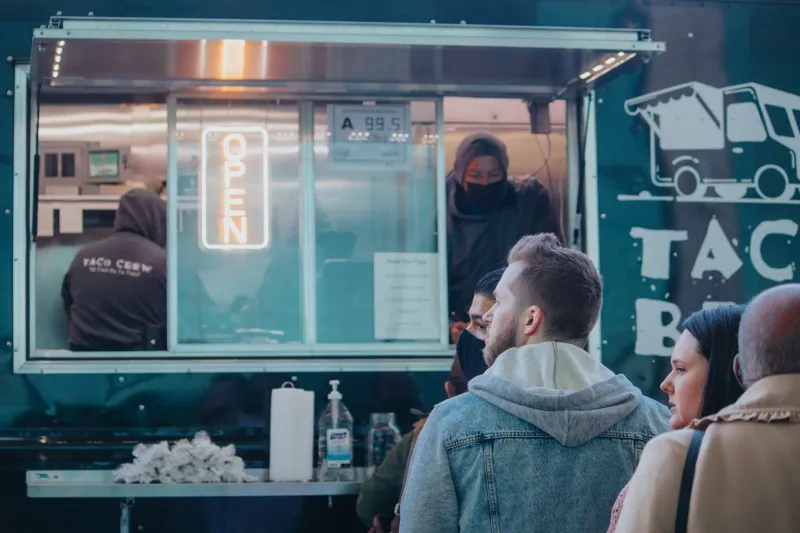
There's a taco truck in Boyle Heights — we're not giving you the cross streets, because that's kind of the whole point — where the laminated menu board offers your standard lineup. Al pastor, carnitas, asada, pollo. Solid. Respectable. The kind of thing that earns four stars on Yelp from a guy named Brad who "doesn't usually like Mexican food."
But if you grew up three blocks away, or if your coworker's cousin put in a quiet word on your behalf, you already know to skip the board entirely. You lean into the window and you ask, in a voice that communicates you are not here by accident, about the guisado de panza. The slow-braised tripe stew that the owner's grandmother made in Oaxaca. The dish that exists nowhere except in that truck and, presumably, in whatever corner of the afterlife his abuela currently occupies.
This is the taco truck underground. And it is absolutely, unapologetically real.
Why the Best Stuff Never Makes the Sign
Let's get the obvious question out of the way: why would any business intentionally hide its best product? From a pure capitalism standpoint, it sounds insane. From a street food standpoint, it makes complete sense.
The operators who guard these off-menu dishes aren't being coy for the sake of mystique. They're protecting something. Regional Mexican cooking — the kind that comes from specific valleys, specific villages, specific grandmothers with specific opinions about dried chiles — is extraordinarily labor-intensive to execute correctly. We're talking multi-day preparations. Ingredient sourcing that requires relationships with specific suppliers, sometimes specific farms. Techniques that took decades to learn and can't be Googled into existence.
When you put that on a menu board, you are implicitly promising it to every single person who walks up to the window. The hungover guy from the apartment complex across the street. The office lunch crowd that wants everything in fifteen minutes. The food blogger who will leave a one-star review because the dish "wasn't what I expected" — meaning it wasn't the Tex-Mex version they grew up eating.
Keeping it off the board is a form of quality control. It's also, frankly, a form of self-preservation.
Trust as the Original Yelp Review
Before apps, before influencers, before anyone thought to photograph their food before eating it, Mexican street food operated on a reputation economy that was entirely oral. You knew which truck was worth driving across town for because someone you trusted told you. That person knew because someone they trusted told them. The chain of knowledge was also a chain of accountability.
This system didn't disappear when smartphones arrived. It just went underground.
In immigrant communities across the US — in the colonias of South Texas, the working-class neighborhoods of Chicago's Little Village, the agricultural valleys of Central California — word-of-mouth still functions as the primary discovery mechanism for the best street food. Not because these communities are behind the times, but because they understand something that food media keeps having to relearn: context matters. Who vouches for you matters. Showing up correctly matters.
A regular at a truck in Pilsen, Chicago described it this way: "My uncle took me there when I was twelve. He introduced me to the owner by name. Fifteen years later, I bring my own people there the same way. That's how it works."
The dish in question, in his case, was a mole negro that the owner makes only on weekends, only in limited quantity, and only for people who've demonstrated they'll treat it with the respect it deserves. Which is to say: people who won't complain that it's "too complex" or ask if there's a version without the chiles.
The Geography of the Off-Menu
What's fascinating about this phenomenon is how specifically regional it gets. The secret dishes aren't generic "authentic Mexican food" — they're hyper-local to wherever the operator or their family is from.
In Houston, there are trucks run by families from Veracruz serving pescado a la talla that has no business being as good as it is, available only to people who know to ask in the right way. In Portland — yes, Portland — a Michoacán family has been quietly making uchepos, fresh corn tamales that are nothing like the masa-and-filling version most Americans picture, for a customer base that could fit in a single dining room. In Phoenix, a truck from Sonora does coyotas, piloncillo-filled pastries that function as dessert, community memory, and a gentle test of whether you actually know what you're talking about.
Each of these dishes carries a geography. An origin story. A set of techniques that are inseparable from the place they came from. Putting them on a standard menu board would strip that context away, flatten them into product, and invite comparisons they were never meant to survive.
What You Have to Do to Get In
Here's the uncomfortable truth for anyone hoping to shortcut their way into the underground: there is no shortcut. Announcing that you've "done your research" or that you "really respect the culture" does not open any doors. Neither does filming your order for social media.
What works is time. Showing up regularly. Ordering from the actual menu without complaint. Learning the names of the people working the truck, because they are people and not a portal to an experience you're entitled to. Bringing cash. Not making a production of anything.
At some point — and this timeline varies wildly — something shifts. Maybe the owner sees you every Friday for six months and starts to recognize you. Maybe a regular you've chatted with puts in a word. Maybe you ask a question about the food that reveals you actually know something, and the person across the counter decides you might be worth the risk.
And then, one day, someone leans out the window and says: "You ever had the...?"
Why This Matters Beyond the Food
The existence of the taco truck underground is not just a quirky food story. It's a direct expression of how immigrant communities in America have always navigated a world that simultaneously wants their culture and undervalues their labor.
The off-menu dish is protected because it is precious. Because it represents knowledge that survived migration, poverty, and the relentless pressure to simplify and assimilate. Because some things are worth more than the revenue they'd generate if they were available to everyone.
There's a lesson in there for the broader food world, which has spent the last decade chasing "authenticity" as an aesthetic while rarely reckoning with what authenticity actually costs the people producing it.
The trucks that keep their best dishes hidden aren't being exclusionary. They're being honest. They're saying: this took generations to make. It will not be rushed. It will not be rebranded. It will not be explained to you in a way that makes you comfortable at the expense of making it less true.
If you want it, you know what to do.
Show up. Be patient. Be a person worth knowing.
The window will open eventually.