Menudo in Montana: The Unlikely Spread of Real Mexican Cooking Across Forgotten America
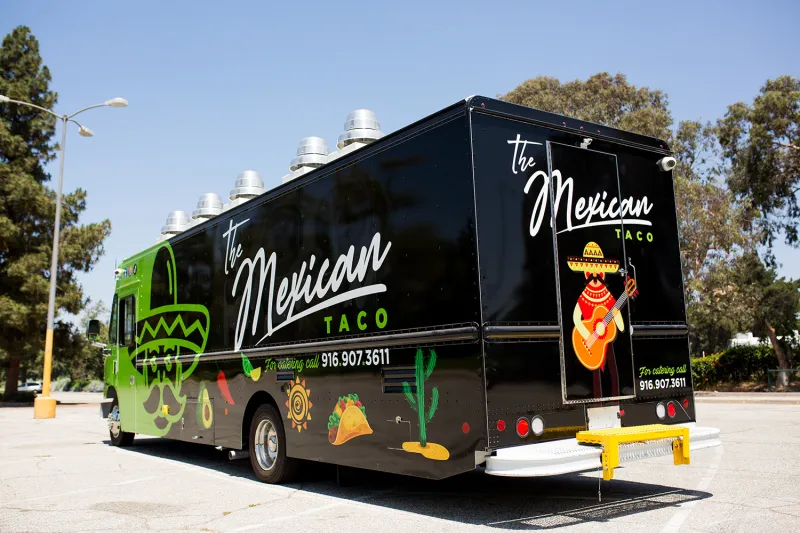
Photo: taco truck rural America small town parking lot Mexican food, via legionfoodtrucks.com
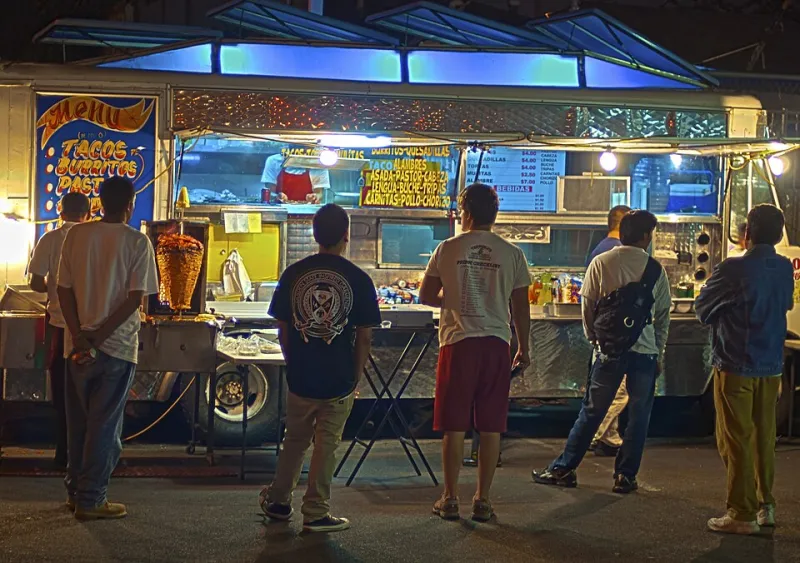
There's a taco truck in Lexington, Nebraska — population just under ten thousand — that serves tlayudas from Oaxaca. Not a Tex-Mex approximation. Not a flour tortilla with a polite sprinkle of cheese. Actual tlayudas: giant, crispy-edged corn tortillas slathered in black bean paste, Oaxacan cheese, and whatever protein came off the grill that morning. The line on Fridays wraps around the parking lot of a former farm supply store.
This is not supposed to be happening. According to the conventional food media narrative, authentic regional Mexican cuisine exists in Los Angeles, Chicago, Houston, and maybe a handful of other major metros where immigrant communities are large enough to support it. Everyone else gets a chain restaurant with a sombrero logo and a margarita made from a powder mix.
Except that narrative is wrong, and it's been wrong for a while now.
The Migration Nobody Was Writing About
Over the past two decades, Mexican immigrant communities have expanded well beyond the traditional gateway cities. Meatpacking towns in Kansas and Nebraska, poultry processing facilities in rural Arkansas, construction booms in places like Bozeman and Billings — all of these economic forces pulled workers from Mexican states like Oaxaca, Guerrero, Michoacán, and Puebla into communities that had rarely, if ever, interacted with Mexican culture beyond the Taco Bell off the interstate.
And where Mexican workers go, food follows. Specifically, taco trucks follow.
What makes this wave different from earlier generations of Mexican-American food culture is the regional specificity. These aren't operators cooking to a generic idea of "Mexican food." They're cooking the food of their home states, their home villages, sometimes their own grandmother's recipes. A woman from Tlaxcala isn't making the same tacos as a guy from Sinaloa, and neither of them is making what you'd find at a restaurant in Cancún. This is hyper-regional, deeply personal cooking — and it's landing in communities that have zero frame of reference for it, which is both the challenge and the magic.
Sourcing Ingredients When the Nearest Mexican Grocery Is Four Hours Away
Ask any taco truck operator in a remote location what keeps them up at night, and the answer isn't permits or propane. It's ingredients.
Finding fresh epazote in rural Maine is not a casual errand. Sourcing the right dried chiles — the specific ones, not whatever sad little jar the regional grocery chain stocks — requires either a serious relationship with a specialty distributor or a willingness to drive to the nearest major city with a Mexican market every two weeks. Many operators do both.
Some have gotten creative in ways that are genuinely impressive. A truck operator in Aroostook County, Maine — that's the far northern tip of the state, where moose outnumber people — figured out that a local farm could grow huitlacoche, the corn fungus that's a delicacy in central Mexico, because the climate was actually right for it. He now has a standing arrangement with the farm and serves huitlacoche quesadillas to bemused locals who initially had no idea what they were eating but kept coming back anyway.
Others have built informal supply chains through community networks. Drivers making regular runs between Mexican communities in different states will carry ingredients. Families visiting relatives back home bring back quantities of dried goods. One operator in Fargo, North Dakota described a system where her cousin in Chicago sources specific chiles from a Pilsen market and ships them UPS every three weeks. "It costs more than it should," she said, laughing. "But what am I going to do, use ancho from a spice rack?"
The Education Happening One Taco at a Time
Here's what's genuinely wild about this phenomenon: it's working. Not just commercially, though many of these trucks are doing serious business. It's working culturally.
In communities where Mexican food was previously understood as either Tex-Mex or nothing, these trucks are introducing people to a complexity and diversity that most Americans — even food-literate ones — don't know exists. The fact that Mexico has thirty-one states with wildly distinct culinary traditions, that the mole from Oaxaca and the mole from Puebla are practically different dishes, that there's an entire coastal cuisine from Veracruz that barely resembles what you'd find in Jalisco — none of this is common knowledge, and these trucks are teaching it.
They're doing it without a curriculum, without a PR strategy, and usually without a website. Just food, a window, and a line of curious people who started coming for the tacos and ended up learning something.
A high school teacher in Worthington, Minnesota described taking her students to a local truck run by a family from Michoacán. "They had never heard of carnitas made the traditional way, fried in lard in a copper pot. They thought carnitas was just shredded pork from a Chipotle." The truck owner ended up explaining the entire process. The kids came back the next week with their parents.
The Operators Carrying It All
None of this is easy, and it would be sentimental nonsense to pretend otherwise. Operating a food truck in a place where you are culturally isolated, where the ingredient supply chain is a constant headache, where the winters are genuinely trying to kill you — this requires a specific kind of stubbornness that borders on the heroic.
Many of these operators face skepticism before they face success. Communities that have never encountered certain dishes can be suspicious of them. Menudo is not an easy sell to someone who grew up on pot roast. Chapulines — the toasted grasshoppers popular in Oaxacan cuisine — have caused genuine controversy in more than one small town before becoming the most talked-about item on the menu.
But the operators keep going, and most of them will tell you it's not purely about economics. There's something about feeding people food from home, about keeping those recipes alive and moving, that matters in a way that's hard to articulate but impossible to miss when you're talking to them.
"This food is who I am," said one operator running a truck outside a grain elevator in western Kansas. "If I cook something else to make it easier, I lose something. I'd rather fight for the real thing."
What This Means for the Rest of Us
The taco truck diaspora is one of the more quietly significant food stories in America right now, and it's largely happening below the radar of the food media, which tends to chase the same coastal scenes and celebrity chef narratives on repeat.
But out there in Lexington and Fargo and Aroostook County, something real is unfolding. Mexican culinary traditions that might otherwise be slowly eroding under the pressure of assimilation and distance are instead being preserved, transported, and shared with communities that are genuinely hungry for them — sometimes literally, sometimes in ways they didn't know they were.
The truck window is small. The menu is handwritten. The parking lot is gravel. And the food is extraordinary.
That's the whole story, really. Bold flavors. Street roots. No apologies — even when the nearest source for the right dried chile is four states away.