Rolling Guardians: The Taco Trucks Keeping Mexico's Forgotten Regional Recipes Alive
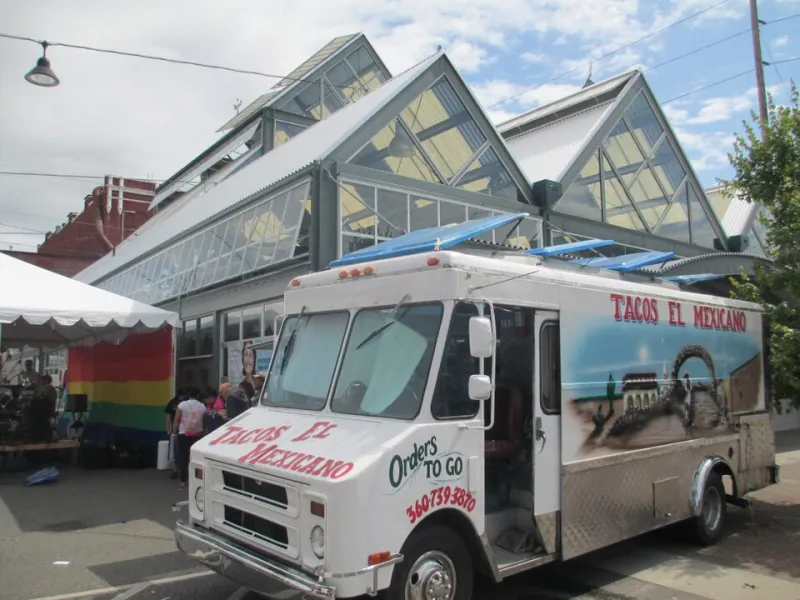
Photo: Robert Ashworth from Bellingham, WA., USA, CC BY 2.0, via Wikimedia Commons
Somewhere in a strip mall parking lot in Fresno, California, a woman named Doña Esperanza is pressing masa onto a comal the exact same way her grandmother did in a small village outside Tlaxiaco, Oaxaca. Nobody commissioned a documentary about it. There's no Michelin inspector standing in line. There's just a hand-painted menu board, a folding table with plastic chairs, and a line of people who know — really know — that what they're about to eat is something genuinely irreplaceable.
This is the taco truck underground, and it's been operating right under everyone's noses for decades.
The Restaurants Got the Glory. The Trucks Got the Recipes.
Here's a truth that should make every food writer feel a little embarrassed: while upscale Mexican restaurants were winning James Beard nominations for their "elevated street food" — which is a fancy way of saying they charged $28 for something you can get better from a window for $4 — the actual knowledge holders were parked outside warehouses and construction sites, feeding the people who built this country.
Mexican cuisine is not a monolith. It's a sprawling, wildly diverse collection of regional traditions that vary dramatically from state to state, sometimes village to village. Oaxacan food tastes nothing like Sonoran food. Veracruz has almost nothing in common with Jalisco. Yet for most of American dining history, "Mexican food" got flattened into a single greatest-hits album: tacos, burritos, nachos, repeat.
Taco trucks, almost accidentally, became the preservation mechanism that restaurants never were.
"When I left Guerrero, I didn't think about bringing my culture," admits Rodrigo Villalobos, who has operated a truck in the Chicago suburbs for eleven years. "I thought about feeding my family. But the food I know how to make is my culture. You can't separate them."
Rodrigo's truck serves pozole rojo made with a chile base that takes him three hours to prepare each morning. He also offers tlayudas on weekends — the massive, crispy-fried Oaxacan flatbreads that bear essentially zero resemblance to anything you'd call a taco. He didn't add them to the menu because a food consultant told him it was a differentiator. He added them because a customer from Oaxaca started crying the first time she tasted one.
"She said it was exactly like home," he says. "That's the only review I needed."
From Sonora to Sacramento: The Carne Asada Chronicles
If you want to understand how regional specificity travels, look at Sonoran carne asada, which has become something of a California institution — particularly in San Diego and the Central Valley — while remaining almost completely invisible in the fine-dining world.
Sonoran-style carne asada isn't just grilled beef. It's a specific cut, typically arrachera or diezmillo, marinated in a particular combination of citrus, garlic, and dried chiles, cooked over mesquite charcoal at a temperature that most American grills can't even approximate. The result has a char and smokiness that's fundamentally different from your backyard Fourth of July situation. Serve it in a flour tortilla — because Sonora is flour tortilla country, not corn — with nothing but guacamole, pico, and maybe a squeeze of lime, and you have something that doesn't need improvement.
Truck operators from Sonora have been serving this exact preparation in California for thirty years. Meanwhile, restaurants "inspired by" Sonoran cuisine have been charging $22 for a version that swaps mesquite for a gas grill and calls it artisanal.
"The tourists go to the restaurants," says María Contreras, who runs a truck in Modesto that her family has operated since 1998. "The people who know, they come to us."
The Adaptation Question: Selling Out or Surviving?
Here's where it gets complicated, because the story of cultural preservation isn't always a clean one.
Every vendor we spoke with acknowledged making some adjustments for American customers. Spice levels get moderated. Unusual offal cuts — the ones that are completely normal in Mexico — sometimes disappear from the menu because they don't move. Some trucks have added items that have no regional heritage whatsoever because the rent on the commissary kitchen doesn't care about authenticity.
Is that selling out? Or is it survival?
"If I only sell what I want to sell, I close in six months and nobody eats any of it," says Villalobos, with the pragmatism of someone who has done the math many times. "So I keep the pozole, I keep the tlayudas, and I also sell the al pastor because people love it and it pays the bills. That's not selling out. That's how a business works."
The more interesting cases are the trucks that have managed to educate their customers over time — slowly introducing unfamiliar regional dishes, building trust through familiar ones, and eventually expanding what their regulars are willing to try. It's a long game, and it requires a customer base that comes back regularly enough to be brought along on the journey.
In Portland, Oregon, a truck called La Huasteca has spent four years introducing Pacific Northwest customers to Huastec cuisine from the coastal regions of Veracruz and Tamaulipas — a tradition that emphasizes seafood, tropical fruits, and cooking techniques that most Americans have never encountered. The owner, who asked to be identified only as Tomás, started with tamales because "everyone understands tamales." He now sells zacahuil — a massive, chile-packed tamale that can weigh up to 150 pounds and is traditionally cooked in a pit — by the slice on weekends, and he sells out every time.
"I didn't change the recipe," he says firmly. "I changed the portion size. That's all."
Why This Matters More Than You Think
Food traditions die when the people who carry them stop making them. It's that simple and that brutal. When a grandmother passes away without teaching her grandchildren how to make her mole negro — with its 30-plus ingredients and three-day preparation — that recipe doesn't go to a restaurant. It doesn't get written down in a cookbook. It just disappears.
Taco trucks are, in many cases, the last institutional memory of recipes that predate colonization. The women and men operating them aren't just feeding people. They're making a daily argument that their food, their culture, and their culinary knowledge are worth preserving — even if that argument is being made from a parking lot at 11 PM on a Tuesday.
The fine-dining world is starting to notice, belatedly. A handful of chefs have begun making pilgrimages to taco trucks the same way a previous generation made pilgrimages to France. Some food writers — this one included — have started treating truck operators with the same seriousness previously reserved for people with restaurant empires.
But honestly? The trucks don't need the validation. They've been doing this without it for thirty years.
Doña Esperanza is still pressing masa in Fresno. Rodrigo's pozole is still simmering at 5 AM in Chicago. And somewhere in a parking lot you've probably driven past a hundred times without stopping, someone is cooking food that you absolutely need to try before it's gone.
Go find it. The window's open.