Before the City Wakes Up: A Day in the Life of the People Who Keep the Taco Trucks Running
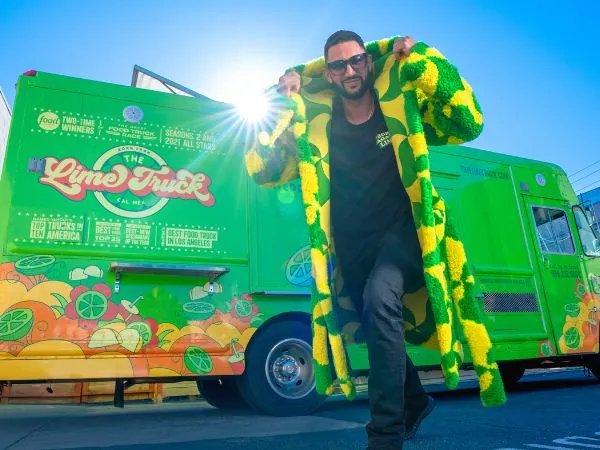
Photo: Delicata, CC BY-SA 4.0, via Wikimedia Commons
Somewhere in the United States right now, it is 4:17 in the morning, and a taco truck owner is already at work.
They are probably in a commissary kitchen — a shared commercial space that most cities require food trucks to use for prep — chopping onions under fluorescent lights while the rest of the country sleeps. The romantic Instagram version of this moment does not exist. There is no golden hour lighting. There is no curated soundtrack. There is a very large cutting board, a very sharp knife, and about forty pounds of white onion that need to be broken down before the truck hits its first location at 7 a.m.
This is the story that doesn't get told enough. Not the tacos — the tacos get plenty of coverage. The story of the person who made them.
4 a.m. Belongs to the Operators
For Rosa, who has been running her truck in the San Fernando Valley for eleven years, the day starts before her kids are awake and ends after they're asleep. "People think I'm out there having fun all day," she says, laughing in the way that only people who have genuinely earned the right to laugh at something can laugh. "And I am. But first I am here, doing this, for four hours before anyone sees me."
"This" is the prep work that makes the whole operation possible. Marinating the al pastor. Slow-cooking the birria consommé from scratch — a process that started the night before and has been going overnight in a commercial stockpot. Prepping the salsas. Cutting the limes. Sourcing the tortillas from the tortilleria that opens at 5 a.m. and whose owner has been selling to Rosa since she started.
The supply chain for a good taco truck is intensely local and intensely personal. These aren't operators punching orders into a restaurant management system. They're calling their carneceria contact directly. They're driving to the produce market themselves. They know which vendor has the best cilantro this week and which one is going through something and needs a little patience at the register.
The Truck Is an Office, a Kitchen, and a Community Center
By the time the truck opens, something shifts. The exhaustion doesn't disappear — it just gets set aside, because there are customers, and customers require presence.
Miguel, who operates out of a spot in East Austin that he's held for going on seven years, describes the window as the best part of his day. "I know probably two hundred people by name," he says. "I know who's going through a divorce, who just had a baby, who got a promotion. They come here and we talk. The taco is the excuse."
This is something that gets lost in the food media conversation about trucks — the social infrastructure they provide. In neighborhoods where sit-down restaurants are expensive and third spaces are scarce, the taco truck is a gathering point. It's where you run into your neighbor. Where the construction crew eats lunch together. Where someone brings their kid for the first time and the kid gets a quesadilla and decides this is their favorite place on earth.
That weight is not lost on the operators. They feel it. "If I close," Miguel says, not finishing the sentence the way he started it, "people would be upset. Not just because of the tacos. Because of this." He gestures at the small crowd clustered around his truck's fold-out table on a Tuesday afternoon. "This doesn't happen somewhere else."
The Part Nobody Warns You About
Here is what the taco truck fantasy leaves out: the permits. The health inspections. The commissary fees. The truck repairs that happen at the worst possible moment — because they always happen at the worst possible moment. The generator that dies on a Friday night when you're at a packed brewery event and there are sixty people in line.
Rosa has a mechanic she calls "my other husband" because of how often she sees him. She has a binder — an actual physical binder — dedicated entirely to permit renewals across the three cities she operates in. She has a backup supplier for her backup supplier.
"Nobody talks about the business part," she says. "They see the truck and they think it's simple. It's not simple. It's a whole company. It's just a company that fits in a parking spot."
The margins are thin. Labor is expensive. Fuel costs have made route planning into a genuine financial calculation. And unlike a brick-and-mortar restaurant, a slow Tuesday doesn't just mean a slow Tuesday — it might mean you don't make enough to cover the commissary fee for the week.
Why They Keep Going
So why do they? Why does Rosa get up at 4 a.m. every day when she could, theoretically, do almost anything else?
"Because this is mine," she says. Simple as that.
Miguel's answer takes longer but arrives at the same place. He talks about his grandmother's kitchen in Jalisco. About learning to make salsa at an age when most kids were watching cartoons. About wanting his daughters to know that the food they grew up eating is worth something — worth building a whole life around.
"I'm not just selling tacos," he says. "I'm keeping something alive. Every truck out here doing it right is keeping something alive."
The taco truck is, at its core, an act of preservation. A way of carrying something forward — a recipe, a technique, a way of feeding people that goes back further than any of us can trace. The operators know this. They feel it in the prep work at 4 a.m. and in the conversations at the window and in the moment when a customer takes a first bite and their face does that thing.
You know the thing. You've made that face. That's the whole point.
The fires stay burning because the people behind them decided they should. And every taco that comes out of that window is proof that the decision was right.