Blood, Salsa, and Regional Pride: The Great American Taco Truck Territory War
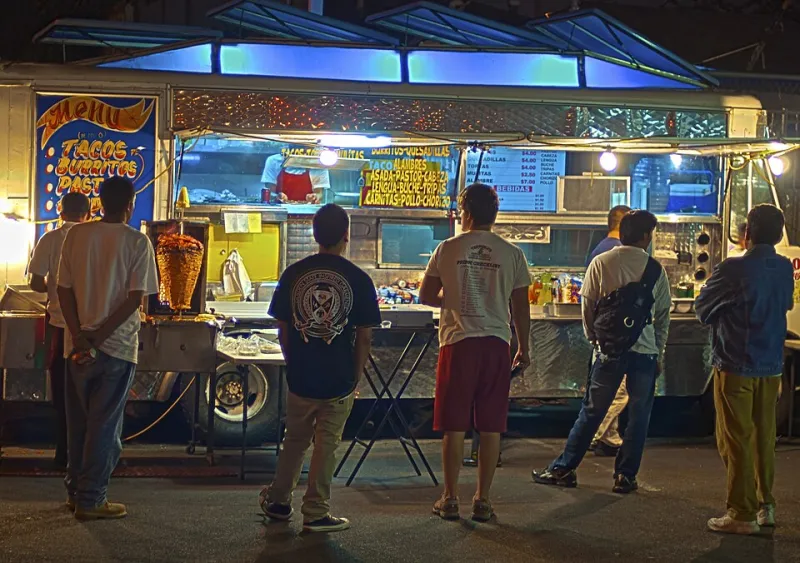
Photo: steve lyon from yosemite, ca, usa, CC BY-SA 2.0, via Wikimedia Commons
Let's get one thing straight before we start: nobody is wrong here. But everybody is absolutely certain that everyone else is wrong. That's the beautiful, infuriating, completely chingón reality of American taco truck culture in 2024. From the sun-scorched parking lots of Phoenix to the muggy side streets of Miami's Little Havana, the regional taco truck scene is fracturing—gloriously, deliciously—into something that looks less like a unified cuisine and more like a full-blown identity war fought with tortillas and salsa verde.
Welcome to the canon wars. Grab a napkin. You'll need several.
Los Angeles: The Al Pastor Empire That Won't Apologize
If you want to understand why Los Angeles takes its taco trucks so personally, you have to understand scale. LA isn't just a city with taco trucks—it's a civilization built around them. There are trucks that have been parked on the same block for thirty years, outlasting three mayoral administrations and two housing booms. And at the center of that civilization sits al pastor, the spit-roasted, pineapple-kissed, Lebanese-Mexican hybrid that has become so synonymous with LA street food that ordering anything else from a certain type of truck feels vaguely rebellious.
The al pastor dominance in LA isn't accidental. It reflects a specific wave of Mexican immigration—predominantly from Jalisco, Mexico City, and Puebla—that shaped the city's street food infrastructure starting in the 1970s and accelerating through the '80s and '90s. The trompo, that vertical rotating spit of layered pork, became a visual shorthand for authenticity. If a truck has one, you trust it immediately. If it doesn't, you ask questions.
But here's the thing the LA faithful don't always want to hear: al pastor is only one chapter in a very long book.
Texas: Where Barbacoa Is a Sacred Weekend Ritual
Drive through San Antonio on a Saturday morning and you'll understand something about Texas that no tourism board advertisement will ever capture. The smell hits you first—slow-cooked beef cheek, wrapped in maguey leaves (or, more practically these days, foil), rendered into something so tender it barely qualifies as solid matter anymore. Barbacoa in Texas isn't a menu item. It's a weekly sacrament.
The Texas taco truck tradition draws heavily from northern Mexican states—Nuevo León, Tamaulipas, Chihuahua—and reflects a border culture where the line between Texas ranch cooking and Mexican ranching traditions was always more of a suggestion than a boundary. Flour tortillas, not corn, are the default here, which will get you into an argument at any taquería north of Austin. The portions are enormous. The salsas are fiery but not theatrical. The whole operation communicates a certain no-nonsense confidence: we've been doing this longer than you've been alive, so sit down.
Barbacoa trucks in Houston and San Antonio aren't chasing trends. They're the trend, whether they know it or not.
Arizona: Carne Asada and the Art of the Perfect Char
Arizona's taco truck identity is built on fire. Specifically, the kind of fire that produces a carne asada with just enough char on the edges to make you momentarily forget about everything else in your life. Tucson and Phoenix have developed a distinct carne asada culture that owes its soul to Sonoran Mexican traditions—the same culinary universe that gave America the Sonoran hot dog and the flour tortilla so thick and pillowy it could double as a small pillow.
What separates Arizona's scene isn't just the meat—it's the whole ecosystem around it. The pico de gallo is chunkier. The guacamole is simpler, less fussy. The cheese (yes, cheese, don't argue) is melted directly onto the tortilla before the meat goes on. It's a regional grammar that outsiders occasionally get wrong, and locals will let you know about it with the quiet, devastating patience of someone who has corrected this mistake many times before.
The carne asada truck in Arizona is also, increasingly, a political statement. In a state with one of the most complicated and contentious immigration histories in the country, the persistence and proliferation of Mexican street food trucks is its own form of cultural resilience. Every perfectly charred steak taco is a small act of presence.
Miami: The Yucatecan Revolution Nobody Saw Coming
Ask most people to name the dominant taco style in Miami and they'll say... nothing, because most people don't think of Miami as a taco truck city at all. That's their mistake, and it's an increasingly expensive one to make.
Over the past decade, a quiet but significant Yucatecan food movement has been taking root in Miami's Mexican immigrant communities—smaller than the Cuban or Venezuelan populations, but punching well above their weight in terms of culinary impact. Cochinita pibil, that slow-roasted annatto-marinated pork wrapped in banana leaves, has been showing up on trucks in Hialeah and Little Havana with a frequency that would have been unimaginable fifteen years ago. Poc chuc. Papadzules. Salbutes.
These aren't flavors that get much national press. They don't have the Instagram-friendly visual drama of a dripping birria taco. But they represent something important: the ongoing diversification of what "Mexican food" means in America, pushed forward not by restaurant groups or food media, but by truck owners from Mérida and Campeche who are simply cooking what they know.
Miami's Yucatecan truck scene is the most compelling argument that the regional taco wars aren't really about which style is best—they're about which communities are present, and how they choose to feed themselves and their neighbors.
What the Map Is Actually Telling Us
Here's the uncomfortable truth buried in all this delicious regional competition: the American taco truck map is essentially an immigration map. The styles that dominate in each city reflect not just culinary preference but migration patterns, community demographics, and the specific histories of which Mexican states sent workers to which American industries in which decades.
LA got Jalisco and Puebla. Texas got the northern border states. Arizona got Sonora. Miami got, eventually, the Yucatán. And each of those communities planted their food traditions in American soil like a flag—not to conquer, but to remember, to maintain a thread back to something real.
So when you argue about which regional taco truck style deserves your loyalty, you're not really arguing about food. You're arguing about history, about belonging, about whose story gets told on the street corner and whose gets overlooked.
The answer, if there is one, is all of them. Loudly, stubbornly, and without apology.
Just don't tell that to someone from San Antonio at 9 a.m. on a Saturday. They're busy with something more important.