Mom's Recipes, Their Rules: The Second-Generation Taco Truck Takeover Is Here

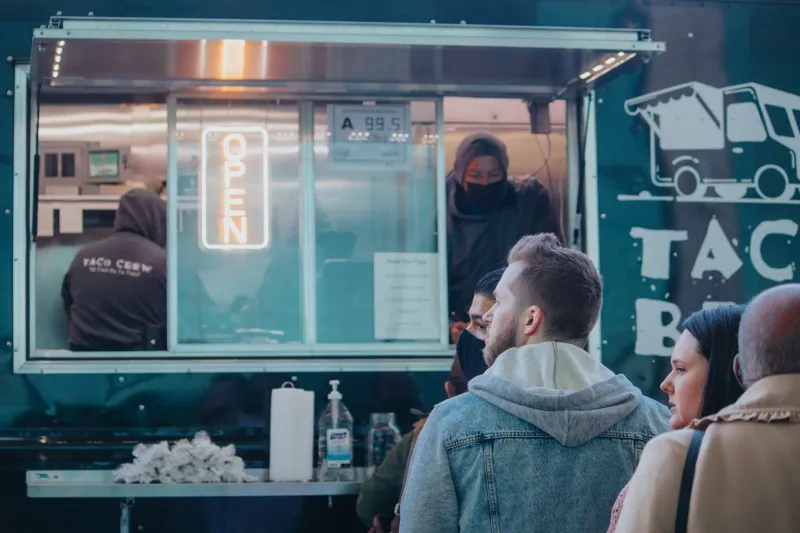
Photo: Edouard Manet, CC BY-SA 2.0, via Wikimedia Commons
There's a particular kind of childhood that comes with growing up in the taco truck business. You learn to make change before you learn long division. You fall asleep to the sound of a pressure cooker. You can spot an improperly seasoned guisado from across a parking lot before you're old enough to drive to one. It's an education you can't get anywhere else — and for a growing wave of young Mexican-American operators across the US, it's the foundation they're building something genuinely new on.
The second-generation taco truck takeover is quiet, but it's real. From East Los Angeles to Chicago's Little Village to Houston's Northside, the sons and daughters of taquero pioneers are stepping behind the ventana and asking a question their parents never had the bandwidth to consider: What if we kept everything that matters and fixed everything that doesn't?
The Inheritance Nobody Asked For (And Everybody Wanted)
For Marco Leyva, 28, taking over his parents' truck in Fresno wasn't a dramatic moment. There was no ceremony. His father handed him the keys one Tuesday morning because his back had given out and someone had to open by 9 AM. Marco had been working the truck since he was twelve. He knew the menu cold. He knew the regulars by name, by order, by which ones were going through something and needed an extra tortilla without being asked.
What he didn't know was how to run a business in 2024.
"My dad kept everything in his head," Marco says. "Inventory, costs, what we made on a good Friday versus a slow Monday — all of it just lived up there. When I took over, I had to basically reverse-engineer the whole operation from scratch."
This is a story you hear over and over again from second-gen operators. The food? Immaculate. The infrastructure? Somewhere between nonexistent and a shoebox of receipts. The transition from family operation held together by loyalty and muscle memory to actual functioning business is where most of these young operators are spending the bulk of their energy — and where they're quietly revolutionizing an industry.
The Instagram Problem (That Isn't Really a Problem)
Ask any first-generation taco truck owner what they think about social media and you'll get one of two reactions: deep suspicion or complete indifference. Ask their kids and you'll get a content calendar.
Daniela Fuentes, 25, runs her family's truck in San Antonio with her older brother and has grown their Instagram following from zero to over 40,000 in eighteen months. She posts videos of the birria being pulled, reels of the consommé hitting the cup, close-ups of the crispy cheese skirt on a quesabirria that genuinely looks like it was designed by someone with a film degree. It wasn't. It was designed by someone who grew up watching her grandmother cook and figured out that a phone camera and decent lighting could share that magic with people who'd never otherwise find a truck parked behind a tire shop on the south side.
"People act like putting something on social media makes it less authentic," Daniela says, with the kind of patience you develop after explaining something obvious for the hundredth time. "But my grandmother didn't have a secret recipe so it could stay a secret. She had it so people could eat good food. More people finding us doesn't change what's in the pot."
The results are hard to argue with. The Fuentes truck now does a Friday birria pre-order that sells out by Wednesday. They've hired two additional staff members. And the regulars — the ones who've been coming since before Daniela was born — still show up, still get their usual, still know they're eating something real.
When the Menu Becomes a Negotiation
Not every second-gen operator is just running the same truck with a better Instagram presence. Some are pushing the food itself — carefully, diplomatically, with full awareness that every new item is a potential argument with a parent who perfected the original.
Eddie Ramos, 30, grew up working his family's truck in Dallas. When he started experimenting with a smoked brisket taco — a direct nod to Texas barbecue culture, folded into a handmade corn tortilla with his mother's chile colorado — his dad didn't speak to him for three days. Then the brisket taco sold out on its first weekend. Then his dad asked for the recipe.
"He'd never admit it, but he was proud," Eddie says. "He just needed to see that I wasn't replacing what we do. I was adding to it. The al pastor is still the al pastor. It's never changing. But we're in Texas. Brisket belongs here too."
This is the core tension that defines second-generation taco truck culture: the difference between evolution and erasure. The operators who are getting it right aren't abandoning their parents' recipes or chasing trends for the sake of a viral moment. They're treating the original menu like a foundation — unshakeable, non-negotiable — and building carefully on top of it.
The Brick-and-Mortar Question
For some families, the truck was always supposed to be a stepping stone. For others, the truck is the dream — the mobility, the low overhead, the direct connection to the street and the neighborhood. The second generation is navigating both visions simultaneously, often within the same family.
Several young operators have expanded into brick-and-mortar locations without abandoning the truck, running both in parallel and discovering that the two formats feed each other in unexpected ways. The truck builds the brand. The restaurant provides stability. And somehow, the food tastes the same in both places, because the same people are making it.
What none of them are doing is walking away from where they came from. The trucks stay on the street. The recipes stay in the family. The only thing that changes is who's at the window — and how much they know about running a business versus just running a truck.
The Real Legacy
The word authenticity gets thrown around so much in food media that it's basically lost all meaning. But when you talk to second-generation taco truck operators, you realize they're not particularly interested in the debate. They know what their food is. They know where it came from. They watched it get made every day of their lives.
What they're building isn't a rebrand. It's a continuation — louder, more visible, better organized, and maybe with a few items on the menu that didn't exist before. The salsa recipe hasn't changed. The tortillas are still pressed by hand. Abuela still has opinions about everything, and those opinions are still correct.
The game isn't being rewritten so much as it's being expanded. And if the kids who grew up in the back of these trucks have anything to say about it, the next generation will have even more to inherit.