After Last Call, Before Sunrise: The Hidden Economy That Keeps Taco Trucks Rolling Past Midnight
Photo: Alexander Migl, CC BY-SA 4.0, via Wikimedia Commons
Every city has a moment when it officially stops. In Austin, it's when Sixth Street's neon flickers out. In Chicago, it's the last Blue Line train screeching into the tunnel. In Phoenix, it's whenever the kitchen at the club decides nobody needs more nachos. But here's the thing nobody puts in the tourism brochures: the city doesn't actually close. It just changes hands.
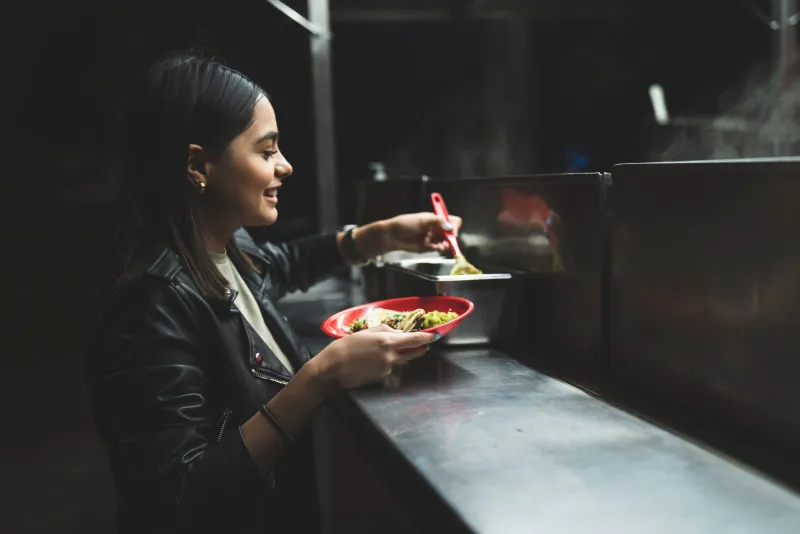
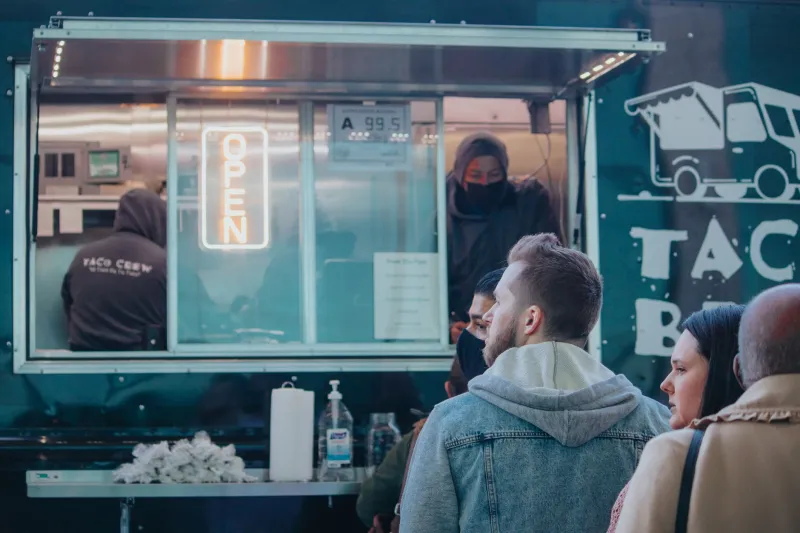
And the people holding the keys at 2:47 a.m.? They're standing behind a taco truck window, flattening asada on a comal while a bachelorette party argues about al pastor.
The Second Shift Nobody Talks About
Ask any taco truck operator about their business and they'll give you the same split answer. There's the daytime hustle — lunch rushes, construction crews, the abuela who comes every Tuesday. And then there's the night game, the one that runs from roughly 10 p.m. to 4 a.m. and quietly funds half the operation.
The late-night customer is a different animal entirely. They're not browsing. They're not comparing your trompo to the truck three blocks over. They have one mission: something hot, something fatty, something with enough salt and acid to reboot a human being before morning. A plate of tacos at 3 a.m. isn't dinner. It's damage control.
Smart operators figured this out years ago. The trucks parked near brewery districts, hospital emergency rooms, warehouse districts, and highway exits don't do it by accident. Location in the late-night economy is everything, and the best spots are guarded like family heirlooms — because they are.
Why the Menu Changes When the Sun Goes Down
Here's something that surprises people: many trucks run a different playbook after midnight.
The daytime menu might feature delicate fish tacos, thoughtful vegetarian options, a nice salsa flight. The 3 a.m. menu? It's built for speed and forgiveness. Asada, pastor, carnitas. Items that grill fast, survive a line of twenty drunks without falling apart, and taste even better to someone whose standards have... relaxed.
Portion strategy shifts too. Late-night customers overpay happily for burritos the size of a forearm. Nobody at closing time has ever said, "Hmm, that's too much carne." The mulita — basically a quesadilla that went to the gym — exists largely because of this crowd.
Even the salsa station tells a story. Day trucks offer range. Night trucks often put out one fiery red and one smoky roja, because at 3 a.m., choice is the enemy. Give the people two options and keep the line moving.
The Staffing Puzzle
Running a night operation means solving a problem most food businesses never face: who wants to work the hours nobody else wants?
The answer, it turns out, is a small crew of legends. Late-night taco workers develop a skill set that would humble a fine dining veteran. They're line cooks, bouncers, therapists, and translators of slurred orders — sometimes simultaneously. A good overnight taquero can read a customer's state from ten feet away and adjust the salsa recommendation accordingly. That's not on any culinary school syllabus.
The pay has to reflect it, which is one reason the night window stays profitable despite lower volume. Margins on a 3 a.m. taco are excellent precisely because labor is lean and the product is simple. No sixty-item menu. No plating. No apologies.
Festivals, Factories, and the Exit Economy
Bars get all the credit for late-night traffic, but they're only part of it.
Concert venues and festival grounds generate tidal waves of hungry humanity at predictable hours. Shift workers — nurses, bakers, security guards, warehouse pickers — need real food at hours the rest of the country considers a mistake. A truck parked outside a hospital at 5 a.m. isn't serving drunks; it's feeding the people who just saved lives all night. Ask any night-shift nurse about their taco truck and prepare for a level of loyalty usually reserved for family members.
Then there's the exit economy: the mass movement of people leaving an event all at once, hungry, with cash still burning holes in their pockets. Trucks that position themselves along those walking routes can do a week's worth of business in ninety minutes. The operators who know this treat event calendars the way stock traders treat earnings season.
The Price of Owning the Night
It's not all easy money. The late-night window comes with real costs — security concerns, rowdy crowds, city ordinances that treat food trucks like a public menace after midnight, and the sheer physical toll of working hours that wreck your social life.
Some cities have gotten friendlier, loosening permits and extending operating hours as they realize food trucks keep post-bar crowds fed and calmer. Others still make trucks jump through hoops that would exhaust an Olympic hurdler. The operators who survive are the ones who learn the local rulebook cold and build relationships with the cops and security guards who work the same corners they do.
But for those who crack it, the night window is the closest thing the food business has to a cheat code. Low competition, desperate demand, simple menu, fat margins.
So next time you stumble out of a bar at last call and see those glowing lights down the block, understand what you're looking at. That's not just a taco truck. That's the real closing time of America — and the person behind the window is holding down the only business in town still open.
Buy the tacos. Tip in cash. Say thank you. You're speaking to someone who's awake so the rest of the city doesn't have to be.