No Truck, No Problem? Inside the Ghost Kitchen Hustle Rewriting the Taco Street Cred Rulebook
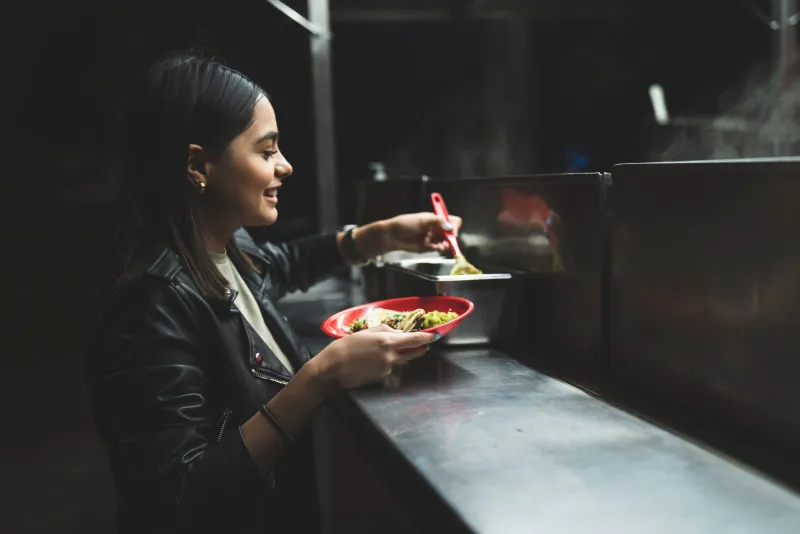
Somewhere in a shared commercial kitchen in East Austin, a 26-year-old named Marco is making birria that would make his abuela cry — and not the bad kind of cry. His consommé is fire. His cheese pull is architectural. His tortillas are pressed fresh every two hours. And he has never, not once, served a single taco out of a truck window.
Marco runs a ghost kitchen operation. He leases prep space from 4 PM to midnight, packs his orders into branded insulated bags, and pushes everything out through DoorDash and Instagram DMs. On a good Friday, he does 80 orders. He has zero employees, one commercial lease, and no engine to blow out on the I-35 feeder road at 7 AM on a Tuesday.
The old-timers think he's cheating. He thinks they're romanticizing a grind that broke half their bodies before 50.
Both of them are kind of right.
The Truck Was Never Really the Point
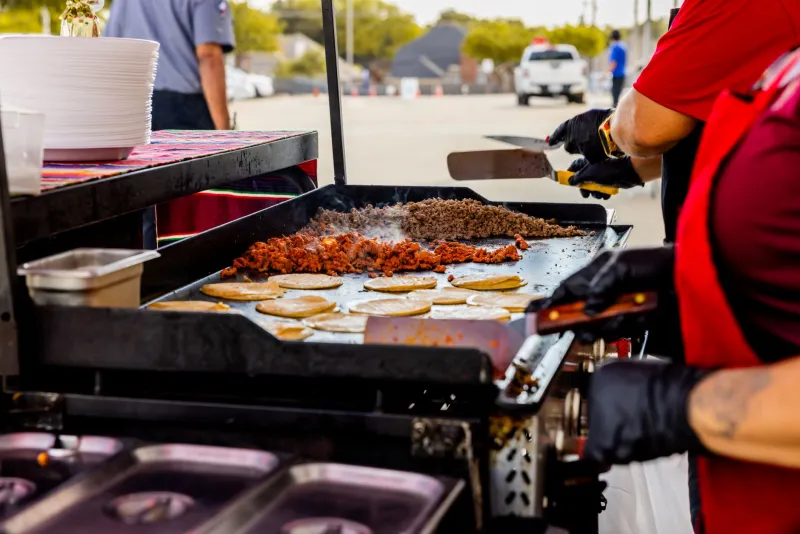
Here's the thing the nostalgia crowd forgets: the taco truck wasn't a lifestyle choice. It was a workaround. When Mexican and Mexican-American entrepreneurs couldn't get restaurant loans, couldn't afford commercial leases in desirable zip codes, and couldn't navigate the bureaucratic maze of brick-and-mortar permitting, they put their kitchens on wheels. The truck was the hustle. The tacos were always the point.
So when a new generation of operators looks at the ghost kitchen model — lower overhead, no vehicle maintenance, no parking wars with the city — and sees a cleaner path to the same destination, it's not a betrayal of the culture. It might actually be the most street thing you can do: use whatever tools are available to get your food to the people who want it.
That argument doesn't land everywhere, though.
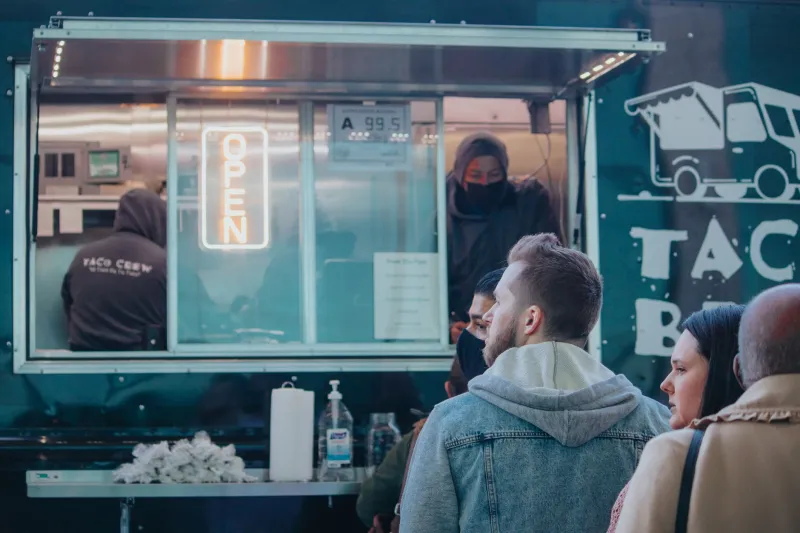
"The truck is the brand," says Leticia, who has operated her Oaxacan-focused truck in the San Fernando Valley for eleven years. "People come to me. They find me. That relationship — that's not something an app can replicate." She's not wrong either. The parasocial bond between a taco truck regular and their spot is one of the most genuine things left in American food culture. A ghost kitchen doesn't have a face. It has a thumbnail.
What the Numbers Actually Say
Set aside the philosophy for a second and look at the spreadsheet, because the spreadsheet is genuinely interesting.
A used food truck in decent condition runs $40,000 to $80,000. Commercial vehicle insurance, health permits, commissary fees (because most cities require trucks to operate out of a licensed commissary kitchen anyway — surprise!), fuel, maintenance, and the occasional $500 ticket for parking six inches over a line adds up fast. Industry estimates suggest truck operators spend between $50,000 and $150,000 annually just to stay road-legal and operational before they've paid themselves a dollar.
A ghost kitchen lease in a major metro? Anywhere from $1,500 to $5,000 a month depending on the city and the hours. Add packaging, platform fees (DoorDash and Uber Eats take a brutal 15-30% cut, which is its own conversation), and ingredient costs, and you're looking at a fundamentally different math problem.
The ghost kitchen model isn't automatically cheaper — those delivery platform fees are genuinely predatory — but it is differently expensive. And for operators who are good at logistics, social media, and volume cooking, the ceiling is higher faster.
Some hybrid operators are cracking the code by using ghost kitchens for delivery revenue while still doing pop-ups, farmers markets, and weekend events to maintain the human connection. They get the scale without fully disappearing behind an app icon.
The Street Cred Question Nobody Wants to Answer Honestly
Let's be real about something: "street credibility" in food has always been partially manufactured. The moment a taco truck got written up in a city magazine, it stopped being purely street. The moment someone put their salsa in a Whole Foods, the street was in the rearview. Authenticity is not a binary — it's a dial, and everybody's turning it.
What actually matters, and what the best ghost kitchen operators understand, is whether the food still carries the DNA. Are you sourcing dried chiles the right way? Are you making your own adobo or opening a can? Is the process still rooted in something real, or have you optimized every soul out of it in the name of consistency?
Javier, who launched a ghost kitchen-only al pastor operation in Chicago's Pilsen neighborhood last year, puts it plainly: "My trompo is in my kitchen. Nobody sees it spin. But it's spinning. The food is the same. Maybe better, because I'm not distracted by parking drama and I have actual ventilation."
His Yelp reviews don't know he doesn't have a truck. They just know the tacos are correct.
The Hybrid Future Is Already Here
The most interesting operators aren't choosing sides. They're building systems that use ghost kitchens as the engine and events, pop-ups, and community presence as the face. Think of it like a band that records in a studio but still tours — the studio is where the work gets done, but the live show is where the relationship lives.
Several operators in Los Angeles, Houston, and Phoenix are running ghost kitchen operations during the week and hitting weekend markets and lot events to stay visible. They use the delivery revenue to fund the events. They use the events to build the audience that drives the delivery revenue. It's a flywheel, and once it's spinning, it's genuinely hard to stop.
The city permit offices haven't fully caught up with this model, which creates its own complications. Some jurisdictions have started cracking down on ghost kitchen operations that market themselves with location-specific language without having a physical storefront. Others have embraced them as a low-barrier path to food entrepreneurship. The regulatory landscape is a patchwork, which — honestly — sounds a lot like the early days of the taco truck.
The Soul Is in the Salsa, Not the Axle
Here's where we land: the ghost kitchen revolution isn't the death of taco truck culture. It's an evolution of the same underlying impulse — feed people real food, make a living doing it, don't ask permission from people who don't understand what you're building.
Marco in East Austin is still sourcing his guajillos from the same distributor his uncle used. Javier in Pilsen is still calling his mom when the adobo tastes off. The truck was never the soul. The soul was always the cook, the recipe, the refusal to water things down for an audience that might not get it.
Whether that happens through a window on wheels or a DoorDash notification on someone's phone at 10:45 PM on a Wednesday — the taco doesn't care. The taco just wants to be made right and eaten fast.
Everything else is a delivery method.